Why Does Task Manager Show Multiple Chrome Processes?
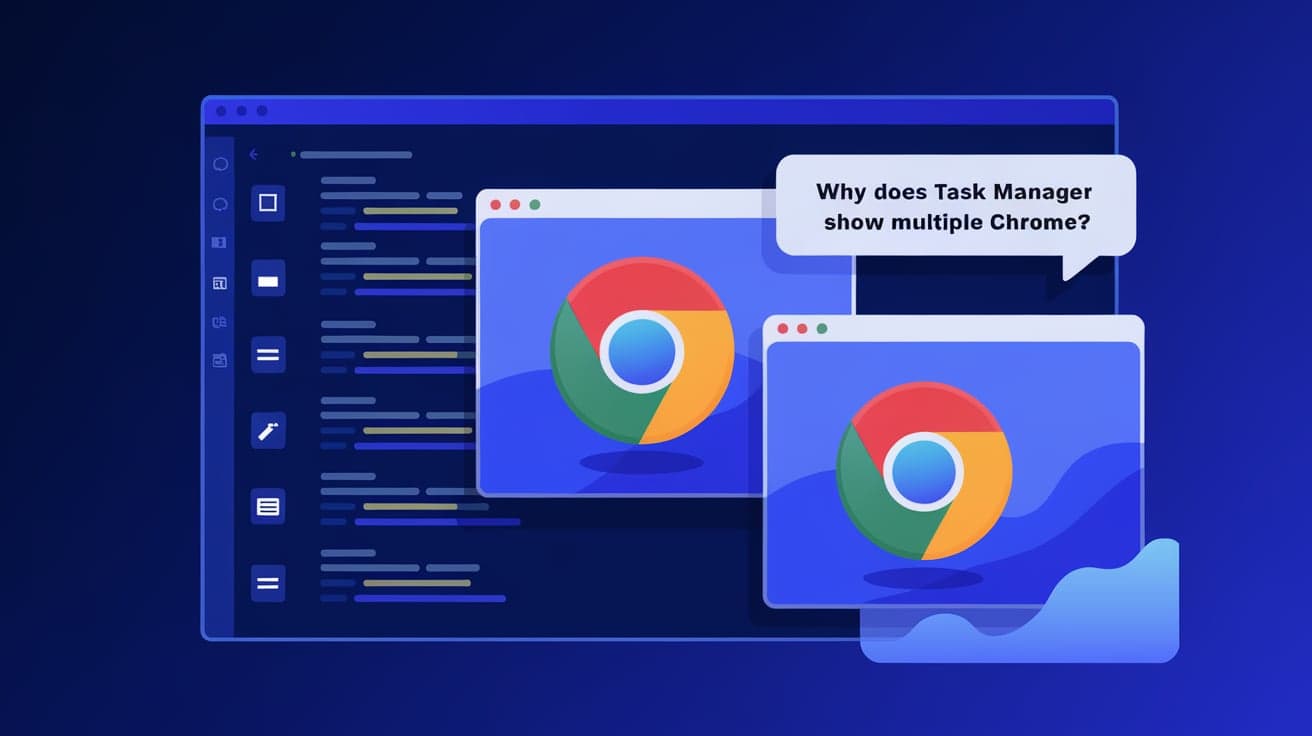
If you’ve ever opened your Task Manager while using Google Chrome, you might have been surprised to see multiple Chrome processes running. It’s natural to wonder why a single application appears so many times, and it might even make you worry about your computer’s performance. The truth is, this behavior is by design, and it has a lot to do with how Chrome manages resources and improves stability.
In this article, I’ll explain why Task Manager shows multiple Chrome processes, how this affects your system, and what you can do to manage it better.
Understanding Chrome’s Multi-Process Architecture
Unlike some other browsers, Google Chrome uses a multi-process architecture. This means that instead of running as a single process, Chrome splits different tasks into separate processes. Here’s what’s happening behind the scenes:
Tabs as Independent Processes
Each tab you open in Chrome runs as a separate process. This isolation ensures that if one tab crashes, it doesn’t affect the others.Extensions and Plugins
Extensions and plugins also run in their own processes. This helps prevent poorly written extensions from crashing the entire browser.Browser Core Processes
Core functionalities like the browser engine, rendering engine, and JavaScript handler run as individual processes.
This design may seem resource-intensive, but it actually enhances Chrome’s stability, speed, and security.
Why Does Chrome Use Multiple Processes?
1. Improved Stability
If one tab or extension stops responding, it won’t crash the entire browser. For example, if you’re watching a video on YouTube in one tab and reading an article in another, a problem with the video tab won’t disrupt your reading.
2. Enhanced Security
Each process runs in a sandboxed environment, limiting its ability to affect other processes or your system. This isolation reduces the risk of malware spreading.
3. Better Performance
By splitting tasks into different processes, Chrome can utilize multiple CPU cores more effectively. This makes it faster at handling complex tasks like rendering web pages or running JavaScript-heavy websites.
How to Check Chrome Processes in Task Manager
You can view Chrome’s processes in two ways: your computer’s Task Manager or Chrome’s built-in Task Manager.
Using Your Computer’s Task Manager
Press Ctrl + Shift + Esc on Windows or Command + Space and type Activity Monitor on Mac.
Look for multiple entries labeled Google Chrome.
Each entry represents a separate process, like tabs, extensions, or system tasks.
Using Chrome’s Built-In Task Manager
Open Chrome.
Press Shift + Esc to open Chrome’s Task Manager.
Here, you can see detailed information about each process, including the tab or extension name, memory usage, and CPU consumption.
This tool gives you more clarity on what each process is doing.
Does Having Multiple Processes Slow Down Your Computer?
The short answer is: it depends. While Chrome’s multi-process design improves stability and security, it can also use a significant amount of memory (RAM). Here’s when it becomes a problem:
High Memory Usage: If you have limited RAM and open many tabs or use resource-heavy extensions, your system may slow down.
Background Processes: Some extensions and websites keep running even after you close their tabs, using up resources unnecessarily.
If your computer struggles with performance, managing Chrome’s processes can help.
How to Manage Chrome’s Multiple Processes
If multiple Chrome processes are affecting your computer’s performance, there are steps you can take to optimize them.
1. Close Unused Tabs
Each open tab uses memory, even if you’re not actively viewing it. Close tabs you no longer need to free up resources.
2. Disable Unnecessary Extensions
Extensions run as separate processes and can consume significant resources. To manage extensions:
Click the three-dot menu in Chrome.
Go to More tools > Extensions.
Disable or remove extensions you don’t use.
3. Use Chrome’s Task Manager
Chrome’s built-in Task Manager lets you end specific processes without closing the entire browser:
Press Shift + Esc to open Chrome’s Task Manager.
Select the process you want to end (e.g., a heavy tab or extension).
Click End process.
This is useful for stopping processes that are using too much memory.
4. Enable Tab Discarding
Chrome has a feature that automatically suspends inactive tabs to save memory:
Type
chrome://flags/in the address bar.Search for Tab Discarding.
Enable the feature to let Chrome pause tabs you haven’t used recently.
Tips to Reduce Chrome’s Resource Usage
Keep Chrome Updated
Updates often include performance improvements and bug fixes. Go to Settings > About Chrome to check for updates.
Clear Cache and Cookies
Excessive cached files can slow Chrome down. Clear them by going to Settings > Privacy and security > Clear browsing data.
Use a Lightweight Browser Alternative
If Chrome’s multi-process design is too demanding for your system, consider using lighter browsers like Edge or Firefox.
Conclusion
Google Chrome’s multiple processes may seem unusual at first, but they’re a key part of what makes the browser fast, secure, and reliable. While this design can use more memory, it prevents crashes and enhances security by isolating tasks. If you find Chrome’s processes overwhelming your system, simple steps like closing unused tabs, managing extensions, and using Chrome’s Task Manager can make a big difference. By understanding why Task Manager shows multiple Chrome processes, you can take control and enjoy a smoother browsing experience.
FAQs
Why does Chrome show multiple processes in Task Manager?
Chrome uses a multi-process architecture to improve stability, security, and performance. Each tab, extension, and core task runs as a separate process.
How can I reduce the number of Chrome processes?
You can reduce Chrome processes by closing unused tabs, disabling unnecessary extensions, or using Chrome’s Task Manager to end specific tasks.
Does having multiple Chrome processes slow down my computer?
If your computer has limited RAM or you open many tabs, multiple processes can slow it down. Managing tabs and extensions helps reduce resource usage.
Can I stop Chrome from using multiple processes?
Chrome’s multi-process design cannot be entirely disabled. However, you can minimize its impact by managing tabs, extensions, and settings.
How do I check what each Chrome process is doing?
Press Shift + Esc to open Chrome’s Task Manager, which shows details about each process, including memory usage and CPU consumption.
Also read -
how to unblock a website on chrome
how to let chrome access the network using firewall settings